

For many dental associates, the phrase “for-cause termination” starts as a distant legal label in an employment contract and suddenly becomes urgent when a practice manager presents a termination notice. Dentists may assume cause is reserved for criminal conduct or gross misconduct, only to discover that a contract also applies the label to administrative issues, billing discrepancies, policy violations, patient complaints, or vaguely defined performance standards.
The distinction matters because a for-cause finding can affect much more than the timing of a dentist’s departure. Depending on the agreement, it may eliminate a notice period, trigger signing-bonus repayment, shift responsibility for malpractice tail coverage, or activate restrictive covenants. A manageable workplace issue can therefore become an immediate financial and professional problem when broad termination language interacts with other contract provisions.
This article explains how cause is commonly defined in dental employment agreements, why routine operational disputes can lead to unexpected termination, and which contractual protections may reduce that risk. Chelle Law reviews the definition of cause, cure rights, compensation metrics, repayment provisions, malpractice obligations, and post-employment restrictions as interconnected terms rather than isolated clauses.
Key Takeaways
- For-cause termination clauses in dental contracts are often broad and subjective, allowing employers to treat routine operational issues as grounds for immediate dismissal.
- Common triggers include productivity shortfalls, documentation or billing errors, policy violations, and patient complaints, many of which could be addressed through a cure period.
- Signing-bonus clawbacks, tail insurance costs, lost compensation, and restrictive covenants can make the termination label financially significant.
- Clear definitions, objective performance metrics, reasonable cure rights, and limits on retroactive enforcement can reduce uncertainty.
- A dentist who receives a notice should identify the allegations, review the contract’s cause and cure provisions, preserve relevant records, and determine which financial or insurance consequences the employer is invoking.
What For-Cause Termination Means in a Dental Contract
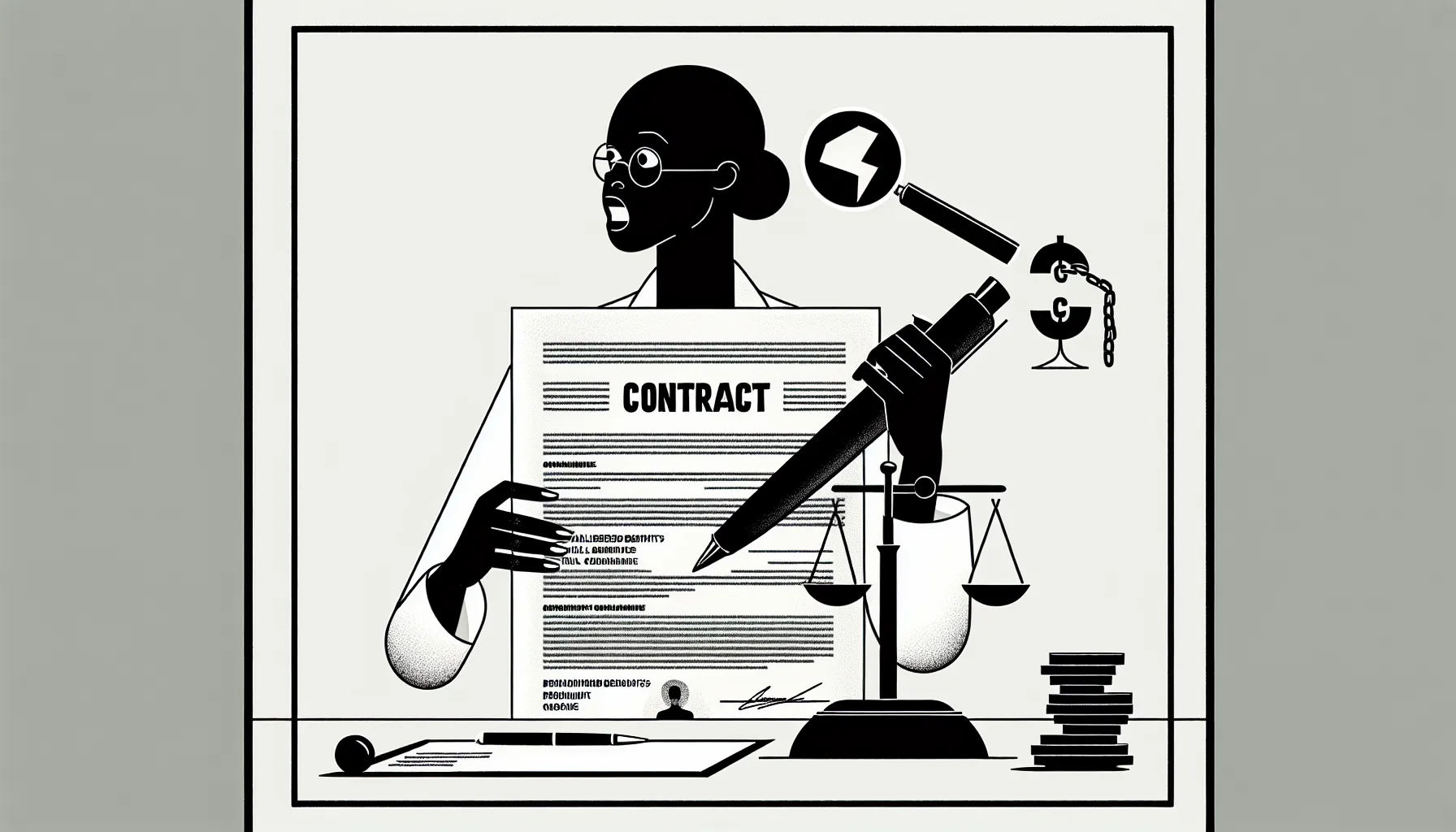
In dental employment agreements, “for cause” is a label employers use to reserve the right to end the relationship immediately, often without the notice, severance, or continued benefits that might accompany a without-cause termination. The definition may include clear forms of misconduct, such as fraud, certain criminal conduct, abuse, license loss, or falsification of records. It may also include less dramatic issues such as failure to meet productivity targets, repeated tardiness, billing errors, violation of office policies, or conduct alleged to bring the practice into disrepute.
Two features make these clauses especially consequential: breadth and subjectivity. Language involving “professionalism,” “reasonable care,” “failure to perform duties,” or harm to the practice’s reputation may give management substantial discretion to decide when cause exists. A careful dental associate contract review therefore considers both the listed events and the process the employer must follow before relying on them.
The definition should also be read alongside the agreement’s other termination provisions. Some events may permit immediate dismissal, while correctable defaults may require written notice and an opportunity to cure. If the agreement fails to distinguish between serious misconduct and routine performance concerns, relatively minor disputes can carry the same contractual consequences as intentional wrongdoing.
Common Events That Lead to For-Cause Claims

Many events eventually labeled as cause are not dramatic. They arise from the ordinary administration of a dental practice, including compensation calculations, charting, billing, scheduling, compliance policies, and patient interactions. The dispute often concerns whether the conduct was serious enough to justify immediate termination or was a correctable workplace issue.
Productivity and Financial Performance Metrics
Some agreements treat failure to meet production or collection targets as grounds for termination. When the threshold, measurement period, or accounting method is vague, an associate may fall short because of a slow month, insurance write-offs, staffing limitations, scheduling changes, or delays outside the dentist’s control. The contract should make clear whether performance is based on gross production, adjusted production, collections, or another defined measure.
A dentist should also determine who controls the variables affecting the metric. Patient assignments, payer mix, hygiene referrals, procedure allocation, laboratory deductions, refunds, and collection timing can all influence reported results. The rules governing dental associate productivity are particularly important when a shortfall can affect both compensation and continued employment.
Documentation, Office Policies, and Patient Complaints
Missing chart notes, coding mistakes, reimbursement disputes, or credentialing issues may be characterized as negligence or breach of duty. Employers may escalate these operational issues when they perceive financial, patient-safety, or regulatory risk. Integrity provisions traditionally address dishonesty, theft, or falsification, but broadly drafted language can also reach disputed statements made during hiring, credentialing, or billing.
Policy violations can create similar uncertainty. Repeated tardiness, a no-show, or failure to follow written protocols involving infection control, prescribing, patient communication, or recordkeeping may be cited as cause, especially in multi-location or DSO environments with centralized compliance systems. Problems become harder to evaluate when the contract incorporates policies that the employer can revise outside the signed agreement.
Patient complaints and adverse outcomes may also lead to a cause allegation, even though a complaint alone does not establish professional misconduct. Practices concerned about reputational or regulatory exposure may react quickly, particularly when the agreement permits termination for conduct deemed harmful to the practice’s reputation. What the associate sees as a correctable communication or clinical issue may then be treated as an incurable breach.
Why Dentists Are Surprised by For-Cause Notices
Several recurring contract and workplace patterns explain why dentists are blindsided by these notices:
- The clause is buried in boilerplate. Associates often focus first on compensation, schedules, benefits, and ownership opportunities. Termination language may receive less attention even though it controls how quickly the relationship can end and what happens afterward.
- The definition is vague. Subjective standards without benchmarks or examples can make the employer’s interpretation decisive. Terms such as “professionalism” or “failure to perform duties” may become proxies for broader performance disputes.
- There is no cure period. Some agreements allow time to correct a default, repair a billing problem, complete training, or improve punctuality. Others permit immediate termination without an opportunity to cure, turning manageable problems into abrupt job loss.
- Office policies are not attached. A contract may require compliance with current and future policies without identifying those rules or limiting the employer’s ability to change them.
- Enforcement appears retroactive. A practice may tolerate conduct for months and later cite it after a management or ownership change. This is especially disruptive when the employer connects earlier events to repayment or insurance obligations.
The surprise rarely comes from a single sentence. It typically results from the interaction between broad language, unwritten or changing workplace expectations, and the remedies attached to a cause determination. This is why termination language should be evaluated together with the agreement’s compensation, policy, insurance, and restrictive-covenant sections.
Financial and Professional Consequences of a Cause Finding
Employers sometimes tie post-employment obligations to the stated reason for separation. If the practice labels the departure as for cause, the associate may lose compensation that would otherwise be payable, face a demand to reimburse incentives, or become responsible for expenses that were allocated differently in other termination scenarios.
- Signing and relocation bonus repayment: The agreement may require full or prorated repayment when employment ends before a specified date, with stricter treatment for a cause-based termination.
- Final production or collection compensation: Payment may depend on whether collections arrive after departure, whether the associate remained employed through a calculation date, or whether the practice claims a right to offset alleged losses.
- Malpractice tail coverage: The reason for termination may influence which party bears the cost of extended reporting coverage under a claims-made policy. Dentists should review the policy language and the contract rather than assume coverage continues automatically. Chelle Law’s guide to tail insurance for dentists explains why this obligation can become significant at departure.
- Restrictive covenants: A non-compete or non-solicitation clause may apply differently depending on how the relationship ends. The scope, enforceability, and practical effect can depend on the contract and applicable law, making a focused dentist non-compete review useful when evaluating post-employment options.
These financial hooks often cause the greatest harm because they can operate simultaneously. A dentist may lose anticipated compensation while receiving a repayment demand and learning that malpractice coverage or a restrictive covenant remains unresolved. The label used in the notice can therefore influence obligations well beyond the final day of work.
What to Do After Receiving a For-Cause Notice
The first step is to identify exactly what the employer claims triggered the notice and whether the agreement defines that event as cause. Determine whether the allegation concerns a specific policy, productivity metric, documentation issue, patient complaint, licensing matter, or other contractual duty. A notice that simply repeats a broad phrase from the agreement may leave important factual and procedural questions unanswered.
Next, review the contract’s notice and cure requirements. An agreement that expressly provides time to remedy a non-serious default creates a different situation from one permitting immediate termination. The dentist should compare the notice with any required delivery method, response deadline, cure period, or escalation procedure and avoid assuming that a general termination provision overrides more specific language elsewhere in the contract.
The financial consequences should then be mapped carefully. Identify whether the employer is demanding repayment of a signing or relocation bonus, withholding final compensation, assigning tail insurance costs, or invoking a non-compete. The broader dental associate termination terms may also address without-cause notice, final collections, patient records, return of property, and obligations that survive the relationship.
Preserve relevant communications and records, including the notice, contract, incorporated policies, amendments, pay stubs, production reports, schedules, billing communications, and prior performance discussions. Patient information and practice records must be handled consistently with applicable privacy, ownership, and access requirements; dentists should not assume they may remove records simply because those materials relate to the allegations.
These steps do not determine whether the employer’s position is valid, but they help clarify what the dispute actually concerns and which deadlines or obligations may require prompt attention. A contract-specific review can distinguish the employer’s allegations from the rights and procedures established by the signed agreement.
Contract Terms That Can Reduce Termination Surprises
Definitions, Cure Rights, and Objective Standards
Before employment begins, dentists can evaluate whether the agreement distinguishes serious misconduct from correctable defaults. The strongest protections are not necessarily longer clauses; they are provisions that explain what qualifies as cause, when termination may be immediate, and when notice and an opportunity to cure are required.
- Narrowly define cause: Specific events such as fraud, defined criminal conduct, license revocation, or intentional falsification create clearer expectations than open-ended references to dissatisfaction or professionalism.
- Include a meaningful cure period: Notice and a reasonable opportunity to remedy non-serious breaches can prevent a correctable billing, documentation, attendance, or policy issue from producing immediate dismissal.
- Define performance metrics: If production or collections can support termination, the contract should identify the formula, measurement period, data source, applicable adjustments, and effect of write-offs, refunds, reassigned procedures, or collection delays.
- Address incorporated policies: The agreement should clarify how policies are provided, whether future changes can materially alter the bargain, and which conflicts are resolved in favor of the signed contract.
- Limit retroactive enforcement: Clear language can reduce the risk that previously tolerated conduct is later reclassified as cause after a change in management or ownership.
- Separate financial consequences from disputed allegations: Repayment, forfeiture, tail insurance, and restrictive-covenant provisions should clearly state when they apply rather than relying on an undefined termination label.
These provisions should be reviewed with the rest of the agreement because one protective sentence may be undermined by another section. For example, a cure right may offer little protection if a different clause allows immediate termination for failure to follow any policy, while a defined compensation target may still be unreliable if the employer controls the formula or supporting reports.
Examples of How Broad Cause Language Operates
The following scenarios illustrate how ordinary practice issues can become termination disputes when the agreement lacks objective standards or procedural protections:
- Billing audit: A new graduate is terminated for cause after an audit identifies coding errors. The cause provision includes “negligence,” provides no cure period, and is then used to support a demand for prorated signing-bonus repayment and a denial of employer-paid tail coverage.
- Collections decline: An associate’s collections fall after a major insurer changes reimbursement. The practice alleges repeated failure to meet productivity thresholds even though the contract does not define the benchmark or account for write-offs and collection timing.
- Patient complaint: A complaint about communication leads to swift termination under language covering conduct that brings the practice into disrepute. The associate had not previously been counseled and received no opportunity to remediate the concern.
Each example shows how broad definitions and missing procedures can convert a workplace concern into an immediate employment and financial crisis. The central questions are what the contract actually defines as cause, what evidence supports the allegation, whether a cure right applies, and which other obligations the employer is attempting to trigger.
Frequently Asked Questions
What conduct can qualify as for-cause termination in a dental contract?
The answer depends on the agreement’s definition. Common examples include fraud, license loss, falsification, serious misconduct, policy violations, documentation or billing problems, repeated attendance issues, patient complaints, and failure to satisfy defined performance obligations.
Does a dental employment contract have to provide a cure period?
A dentist should not assume a cure period exists. Some contracts provide notice and time to correct specified defaults, while others permit immediate termination for broadly defined events. The signed agreement should identify which issues are curable and how the cure procedure works.
Can a production shortfall lead to for-cause termination?
It may if the contract includes productivity or collections within its cause definition or performance obligations. The risk is greater when the formula, measurement period, adjustments, and employer-controlled variables are not clearly defined.
What financial obligations can follow a for-cause termination?
Depending on the contract, a cause finding may affect final compensation, signing or relocation bonus repayment, malpractice tail coverage, benefit continuation, and restrictive covenants. Each consequence should be traced to the specific language governing that obligation.
What records should a dentist preserve after receiving a termination notice?
Relevant materials may include the agreement, amendments, termination notice, incorporated policies, compensation reports, pay stubs, schedules, billing communications, and prior performance discussions. Patient and practice records must remain subject to applicable privacy, ownership, and access requirements.
How can contract review reduce the risk of an unexpected cause termination?
Contract review can identify vague cause definitions, missing cure rights, undefined performance metrics, changeable office policies, repayment triggers, tail insurance obligations, and restrictive covenants before those provisions are invoked during a dispute.
Understand Your Termination Risks Before They Become a Dispute
Chelle Law reviews dental employment agreements and explains how cause definitions, cure rights, repayment terms, malpractice coverage, and restrictive covenants work together.
Contact Chelle Law