
A dental associate’s work schedule and assigned duties affect far more than daily logistics. These provisions influence compensation, professional autonomy, patient exposure, and legal risk over the life of the agreement. Although schedule and duty clauses are often brief, they frequently interact with pay formulas, productivity expectations, termination provisions, and restrictive covenants in ways that shape long-term outcomes.
Schedule language determines when and where services are provided, how availability is defined, and what responsibilities extend beyond chairside care. Duty provisions may also allocate administrative, supervisory, emergency, or coverage obligations that affect productivity and liability without being reflected directly in compensation terms. Ambiguous language can allow working hours, office locations, or non-clinical responsibilities to expand after the associate begins working.
This resource explains common scheduling structures used in dental associate agreements, typical duty allocations, and how schedule provisions interact with compensation, termination, malpractice coverage, and other contract clauses. Chelle Law reviews how these terms operate together so dentists can assess their potential impact on income, workload, patient responsibilities, and professional mobility before signing an agreement.
Key Takeaways
- Dental associate schedule and duty provisions influence compensation, benefits eligibility, workload expectations, and long-term professional flexibility.
- Schedule definitions affect how chair time, administrative responsibilities, on-call coverage, and availability requirements are allocated and enforced.
- Compensation outcomes are often tied to schedule structure, including how cancellations, refunds, lab costs, and productivity benchmarks are handled.
- Malpractice coverage and tail insurance obligations may affect emergency or off-hours care and can create post-employment exposure.
- Schedule and duty clauses frequently interact with restrictive covenants, ownership discussions, and termination provisions.
Dental Associate Schedule Models and Their Practical Impact
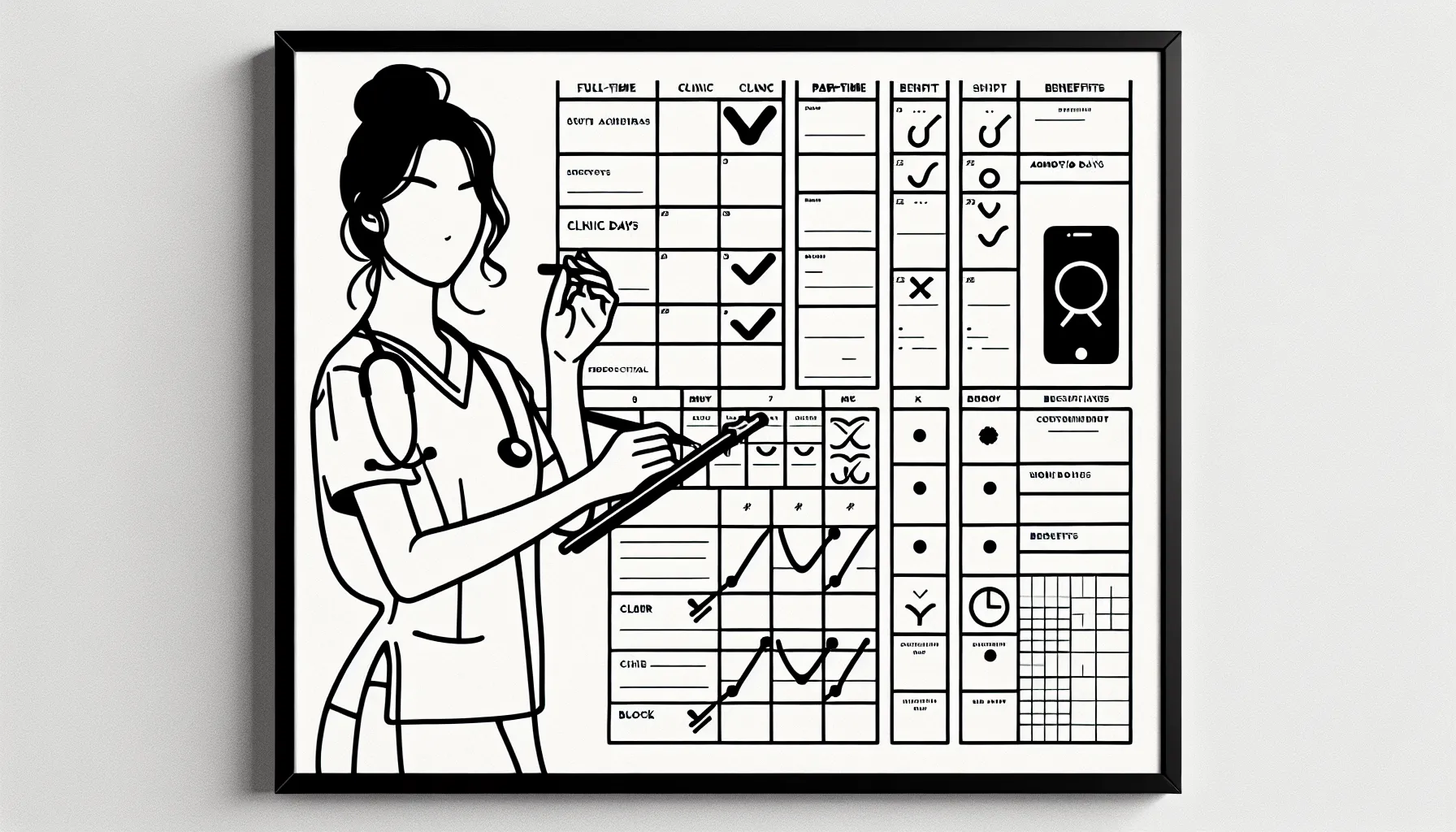
Dental associate agreements typically rely on a limited number of scheduling models. While the labels vary, the structure of the schedule plays a significant role in shaping productivity expectations, compensation outcomes, benefits eligibility, patient continuity, and day-to-day workload.
Full-Time and Part-Time Schedules
Full-time schedules generally require four to five clinic days per week and may be defined by a minimum number of chair hours rather than calendar days. These arrangements are commonly paired with higher productivity expectations and eligibility for benefits. Full-time status may also be linked to production thresholds, bonus eligibility, or guaranteed minimums.
Part-time schedules usually involve one to three clinic days per week with proportionally lower productivity expectations. Benefits eligibility may be reduced or eliminated, and compensation may rely more heavily on production or collections without a guarantee. If part-time status is defined loosely, the employer may retain discretion to change assigned days or hours, affecting income stability and the associate’s ability to maintain other professional commitments.
Both models should be evaluated for minimum hours, expected days, weekend requirements, office hours, and the circumstances under which the schedule can change. Language allowing the employer to alter hours or locations while maintaining the same classification can undermine predictability even when the agreement appears to promise a regular schedule.
Block, Flexible, and Multi-Location Scheduling
Block schedules allocate work into defined groupings, such as consecutive clinic days followed by non-clinical or administrative days. These models are frequently used in multi-location practices to balance coverage across offices. Although block scheduling can improve efficiency, it may concentrate productivity expectations into fewer days and magnify the impact of cancellations or uneven patient volume.
Flexible scheduling models allow the employer to assign shifts or clinic days based on operational needs. These arrangements are more common in larger organizations with centralized scheduling systems, including arrangements addressed in a DSO employment contract. Contracts may provide limited guarantees concerning minimum hours, patient volume, travel, or consistency of assignments, causing income and workload to fluctuate over time.
Multi-location language deserves particular attention because it may affect travel time, patient continuity, production credit, and the geographic reach of a restrictive covenant. The agreement should identify the primary location, explain when additional offices may be assigned, and address whether travel or materially different patient volume changes compensation expectations.
Clinical, Administrative, and After-Hours Responsibilities

Dental associate contracts often describe expected work hours without fully explaining how that time will be allocated or which duties are included. The practical impact depends on how clinical care, administrative work, emergency coverage, documentation, patient handoffs, and supervisory responsibilities are defined and enforced.
Chair Time, Administrative Work, and Supervision
Many agreements specify total working hours per day or week but do not distinguish between chair time and administrative obligations. Chair time generally refers to hours spent providing patient care, while administrative time may include charting, treatment planning, staff meetings, compliance training, onboarding, continuing education activities, and other practice functions.
When administrative duties are not separated from clinical time, associates may experience reduced patient-facing hours without corresponding adjustments to productivity expectations or compensation. This can make stated production benchmarks more difficult to achieve. Continuing education requirements and allowances should also be reviewed to determine whether required training occurs during scheduled hours and whether associated expenses are reimbursed.
Some contracts assign leadership duties such as oversight of hygienists, assistants, or junior clinicians. These responsibilities may include protocol development, quality control, or delegated supervision. If the boundaries are unclear, an associate may assume additional responsibility without corresponding authority, protected administrative time, or additional compensation.
On-Call Coverage, Documentation, and Patient Continuity
Some dental associate agreements require on-call availability or emergency coverage outside regular clinic hours. These obligations may apply to one location or rotate across several offices. Contracts vary on whether this work is separately compensated, how emergency services are credited, and whether travel is expected, so vague language may create additional responsibility without clarity concerning pay, scheduling impact, or liability.
Charting and documentation requirements may include deadlines, format standards, and compliance obligations tied to billing or regulatory rules. Agreements can also address access to electronic records and control of patient charts after employment ends. Unclear standards can increase administrative burdens and create exposure if expectations are enforced unevenly.
Patient continuity provisions should explain responsibility for recalls, incomplete treatment, remakes, and the transfer of care. Some contracts require associates to complete unfinished treatment during a notice period, while others permit a formal handoff. The agreement should also address how production or collections from transferred patients are credited and whether post-termination assistance is compensated.
How Scheduling Affects Compensation and Productivity
Work schedules and compensation provisions are closely linked. Productivity benchmarks, pay formulas, and income stability are often calibrated to assumed patient volume and availability, making schedule language a key driver of actual earnings. A dentist evaluating these provisions should compare the stated schedule with the agreement’s complete associate compensation formula.
Compensation commonly includes a percentage of production, a percentage of collections, a daily minimum, a base salary, or a hybrid structure. Under production-based compensation, pay is tied to fees credited for services performed, but cancellations, procedure mix, refunds, remakes, and lab fee deductions may reduce the amount attributed to the associate. The schedule determines whether expected production levels are realistically attainable.
Collections-based compensation links pay to amounts actually received by the practice. This approach introduces timing delays and exposure to insurance adjustments, patient nonpayment, refunds, or chargebacks. Schedules that limit patient access or concentrate clinical time into fewer days can amplify these effects, especially if the practice controls scheduling but the associate bears the financial consequences of unused chair time.
Daily minimums or guaranteed amounts may stabilize income during a ramp-up period or in a lower-volume setting. Those guarantees are often time-limited and may be reconciled against later production or collections. Dentists should determine whether a stated guarantee is true minimum compensation or a recoverable draw and whether additional clinic days, extended hours, or emergency coverage receive separate pay.
The contract should also address who bears the consequences of no-shows, scheduling gaps, payer delays, and front-office decisions. If the practice controls patient flow while maintaining fixed productivity expectations, the associate may face reduced pay for circumstances outside the associate’s control.
Related Contract Terms That Can Expand Schedule Risk
Schedule and duty provisions do not operate independently. Restrictive covenants, malpractice insurance, termination clauses, compensation adjustments, and office policies determine how scheduling decisions affect the associate during and after employment.
Restrictive covenants are frequently linked to every location where an associate practices rather than one primary office. For dentists who rotate among clinics or provide occasional coverage, this can expand the geographic reach of post-employment restrictions. A focused review of the non-compete language should consider how assigned and temporary locations affect the restriction’s scope.
Malpractice coverage obligations may depend on the scope and timing of clinical duties. Agreements typically identify whether coverage is occurrence-based or claims-made and whether the associate must purchase tail coverage after termination. Emergency care, after-hours treatment, or services at additional offices should fall within the applicable policy, and a malpractice insurance review can clarify coverage and post-employment obligations.
Contracts may also incorporate handbooks or office policies that can change outside the signed agreement. If scheduling procedures, productivity calculations, documentation deadlines, or coverage assignments are left to unwritten or modifiable policies, the practical terms of employment may change without a formal amendment. Important commitments should be stated clearly enough for both parties to understand the governing expectations.
Termination, Ownership Discussions, and Long-Term Flexibility
Schedule and duty clauses often interact with ownership discussions, termination provisions, and post-employment obligations in ways that are not obvious from the face of the agreement. These interactions can determine whether schedule flexibility expands or narrows over time and whether additional responsibilities lead to meaningful professional advancement.
Some agreements reference future ownership or buy-in opportunities while leaving schedule changes largely to employer discretion. The practice may expect expanded clinical duties, management responsibilities, or multi-location coverage without tying those changes to compensation or ownership milestones. If ownership is important, the parties should separately address timelines, valuation methods, decision-making authority, and the conditions for a buy-in rather than relying on a general statement of future intent.
Termination provisions may require the associate to continue working during a notice period, complete treatment, finish charting, assist with patient handoffs, or remain available for designated coverage. The contract should explain compensation during this period and what happens if the practice removes the associate from the schedule. Reviewing the agreement’s termination and notice requirements helps identify obligations that continue after notice is given.
Common warning signs include broad scheduling discretion without defined limits, multi-location work that triggers wider restrictions, uncompensated administrative or supervisory duties, post-termination obligations without compensation clarity, malpractice responsibilities extending beyond scheduled hours, and schedule changes that do not adjust productivity benchmarks. These issues often surface only after employment begins, when expectations shift but the written contract remains fixed.
Reviewing Dental Associate Schedule and Duty Terms
Schedule and duty clauses are not merely operational details. They influence whether compensation formulas perform as expected, how professional liability is allocated, and how easily an associate can transition to another position or ownership opportunity. Small ambiguities can compound into reduced income, increased workload, or unexpected post-employment exposure.
A careful review should compare the schedule with compensation definitions, location assignments, benefits eligibility, productivity benchmarks, malpractice coverage, restrictive covenants, and termination mechanics. Evaluating these provisions together gives the dentist a more realistic picture of the proposed workload and helps identify terms that should be clarified before the agreement is signed.
Frequently Asked Questions
Can a dental practice change an associate’s schedule after the contract is signed?
The answer depends on the agreement’s scheduling language. A contract may establish fixed days and hours, permit changes by mutual agreement, or give the practice broad discretion to adjust the schedule. Dentists should review whether that discretion is limited by notice requirements, minimum hours, designated locations, or compensation protections.
How should a contract address work at multiple dental offices?
The agreement should identify the primary office, explain when other locations may be assigned, and address travel, scheduling notice, patient volume, and compensation. It should also clarify whether every location where the associate works affects the geographic scope of a restrictive covenant.
Do administrative duties reduce a dental associate’s production expectations?
Not automatically. If meetings, charting, training, or supervisory work reduce chair time, the contract should explain whether productivity targets or compensation calculations will be adjusted. Without that protection, an associate may remain responsible for the same benchmark despite having fewer patient-care hours.
Should on-call or emergency dental coverage be separately compensated?
The contract should state whether on-call availability, emergency treatment, and travel outside regular hours receive separate compensation or count toward production. It should also define the coverage rotation, response expectations, billing treatment, and applicable malpractice insurance.
What happens to unfinished treatment when a dental associate leaves?
The agreement may require treatment completion during the notice period or allow the practice to transfer care to another dentist. It should explain patient handoff procedures, chart completion, compensation for remaining work, and how production, collections, refunds, or remakes are allocated.
Which contract clauses should be reviewed with schedule and duty provisions?
Schedule terms should be reviewed alongside compensation, productivity, location assignment, benefits, malpractice insurance, restrictive covenants, termination, patient records, and ownership provisions. These clauses operate together and determine the schedule’s actual financial and professional impact.
Have Your Dental Associate Contract Reviewed
Chelle Law reviews schedule, duty, compensation, location, termination, and restrictive covenant terms so you can understand how the complete agreement may affect your work and future options.
Contact Chelle Law