
Lab fee deductions are among the most consequential and least understood provisions in dental associate contracts. When a practice subtracts the cost of crowns, bridges, implants, dentures, or other laboratory work from production or collections, the adjustment can materially reduce take-home pay. It may also create unexpected clawbacks or disputes over responsibility for remakes, refunds, and failed cases.
The financial effect depends on more than the amount shown on a laboratory invoice. Dentists need to understand whether deductions occur before or after their compensation percentage is applied, how the practice reconciles guarantees, which expenses qualify as lab fees, and whether the employer can recover charges after employment ends. Vague language can shift costs to the associate even when the practice selected the laboratory or the underlying issue was outside the dentist’s control.
Chelle Law reviews dental associate agreements nationwide and evaluates how lab costs interact with compensation, malpractice coverage, termination, and restrictive covenants. This guide explains common deduction methods, contract clauses that require close review, state-law considerations, and negotiation strategies that can protect compensation and clinical autonomy.
Key Takeaways
- Dental lab fee deductions can substantially reduce expected compensation for associates who perform a high volume of crowns, bridges, implants, or removable work. Dentists should request information about typical monthly laboratory costs before signing.
- The contract should define what qualifies as a lab fee, explain whether deductions are based on actual invoices or a fee schedule, and specify whether they apply to production or collections.
- Negotiable protections may include deduction caps, per-case allowances, cost-sharing arrangements, exclusions for warranty work, and limits on post-termination adjustments.
- Associates should receive timely access to itemized invoices and reconciliation reports so they can verify deductions and challenge errors.
- Lab fee provisions should be reviewed together with compensation guarantees, malpractice coverage, termination terms, and final-pay obligations.
What Dental Lab Fee Deductions Cover and Why They Matter
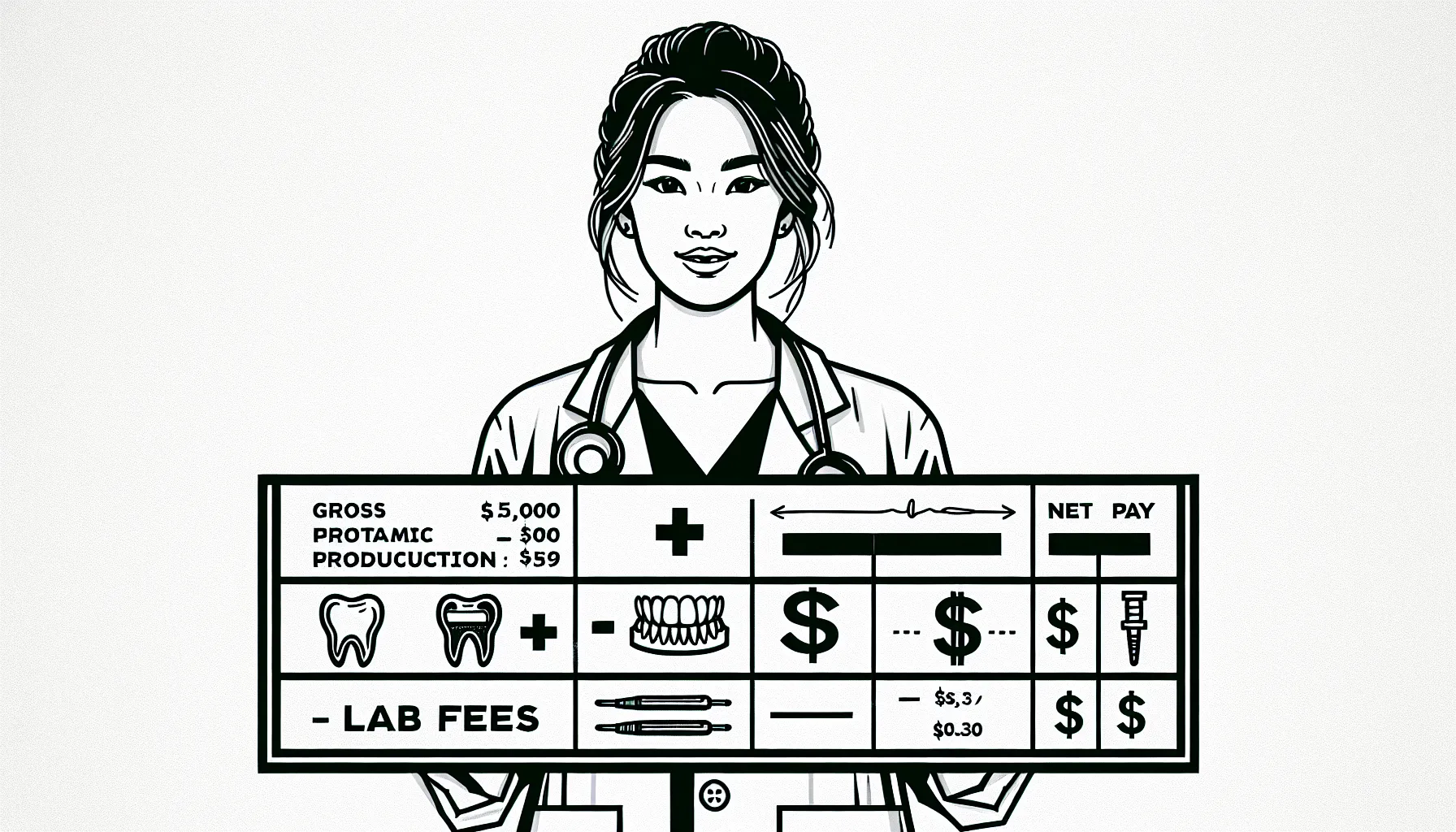
Dental lab fee deductions are reductions taken from an associate’s reported production or collections to account for amounts paid to outside laboratories for prosthetics, appliances, and other fabricated items. Practices use these deductions to approximate net revenue rather than gross production when calculating percentage-based compensation.
Common Lab Expenses and the Financial Risk to Associates
A percentage-based compensation offer can look materially different after case-specific laboratory costs are removed. An associate performing substantial crown, bridge, implant, or removable work may experience a significant difference between the percentage stated in the contract and the compensation ultimately received. Dentists should therefore evaluate the deduction formula as part of a complete dental associate agreement review, rather than treating lab fees as a minor accounting detail.
Lab fee provisions also allocate risk. Unless the agreement limits deductions, the practice may attempt to charge the associate for remakes, patient refunds, insurance write-offs, failed cases, or expenses generated after the dentist leaves. Automatic deductions can also pressure an associate to favor lower-cost materials or in-office alternatives, potentially interfering with independent clinical judgment.
Common items that may trigger deductions include:
- Porcelain-fused-to-metal and all-ceramic crowns
- Bridges and pontics
- Implant crowns, custom abutments, bars, and other implant components
- Complete and removable partial dentures
- Night guards and externally fabricated occlusal splints
- Impressions, models, rush charges, shipping, and custom components
Because almost any externally fabricated item may carry a separate invoice, the contract should use explicit definitions and examples instead of relying on a broad reference to “lab fees.” It should also distinguish ordinary case expenses from remakes, warranty work, and costs caused by laboratory or material defects.
How Lab Fees Change Dental Associate Compensation
Production and Collections-Based Calculations
Dental associates are commonly paid as a percentage of production or collections. Production generally measures the value of services recorded by the practice, while collections measure the money the practice actually receives. The employer’s definition of each term—and the point at which lab costs are subtracted—can substantially affect the result. Dentists comparing these arrangements can review the broader fundamentals of dental associate compensation.
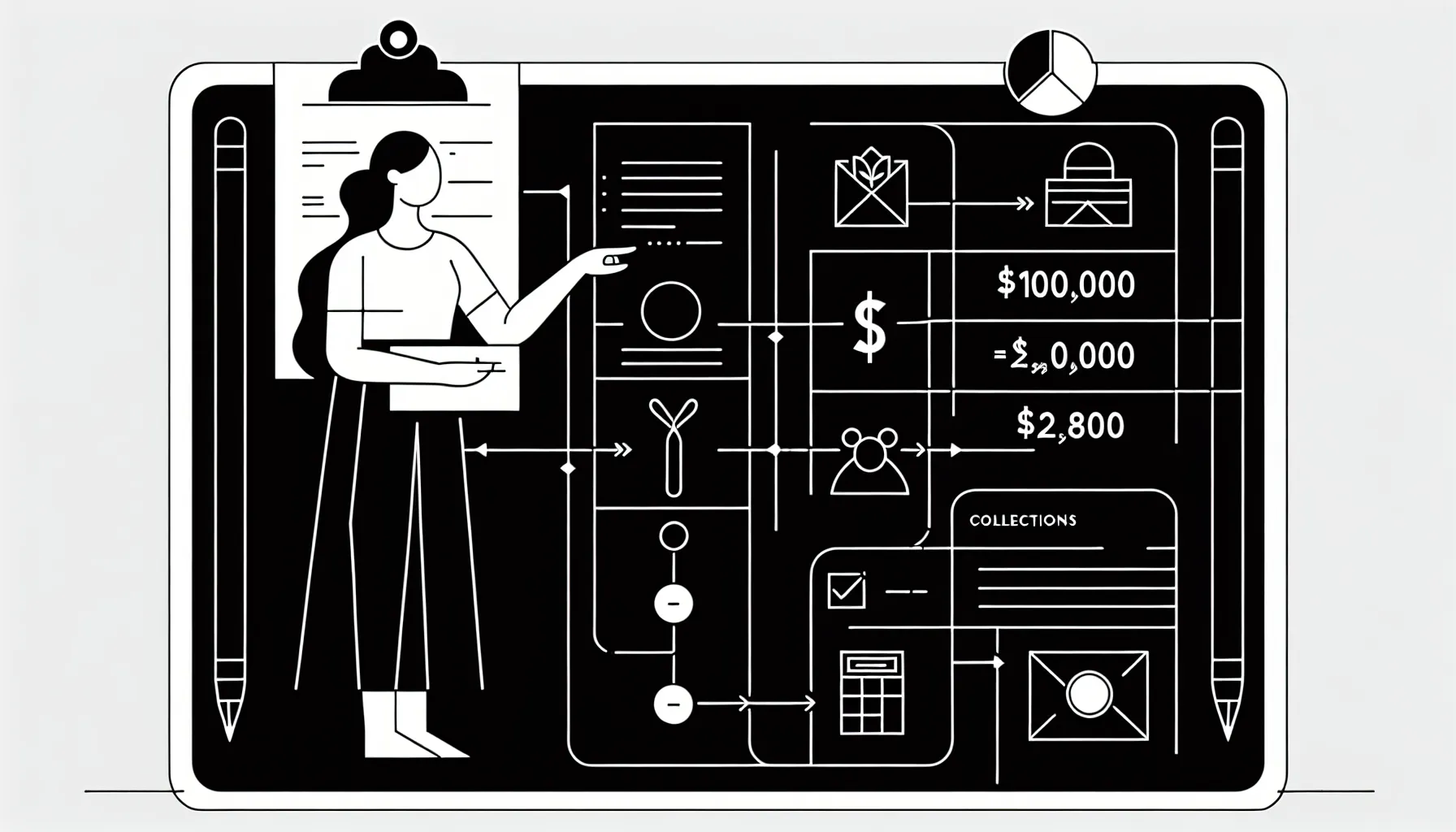
Under a production-based model, the practice may subtract lab fees from gross production before applying the associate’s percentage. For example, if an associate generates $10,000 in production and the employer subtracts $2,000 in lab fees, a 35% compensation rate applied to the remaining $8,000 produces $2,800 in pay.
Under a collections-based model, the employer might reduce collections by lab expenses before applying the compensation percentage. Alternatively, the practice might calculate the associate’s percentage first and then charge the entire lab expense against the resulting pay. These methods do not necessarily produce the same result, so the agreement should include a clear formula and, when possible, a worked example.
The contract should also state whether deductions are calculated per procedure, per claim, or as a monthly aggregate. Timing affects cash flow, reconciliation, tax reporting, and the possibility of adjustments appearing after employment ends.
Guarantees, Draws, and Negative Adjustments
A daily minimum, base salary, or temporary guarantee may provide stability while an associate builds a patient schedule. However, the agreement may treat that amount as an advance or draw that can be reconciled against future production. Lab fee deductions can make it harder to exceed the guarantee and may create a negative balance that carries into later pay periods.
Associates should watch for language permitting the practice to reduce a guarantee after production increases, recover earlier guarantees through future offsets, or carry negative adjustments indefinitely. A contract should explain whether deficits roll forward, whether repayment is required, and whether the employer can pursue a balance after termination.
Problematic provisions include retroactive chargebacks for remakes without a defined warranty policy, an unlimited right to recover lab costs from future compensation, and deductions that combine laboratory charges with materials or supplies without itemized accounting. These terms shift financial risk to the associate and commonly lead to disputes when production slows, patients receive refunds, or employment ends.
Contract Terms That Control Lab Fee Deductions
Calculation Methods, Documentation, and Audit Rights
The contract should state whether deductions are based on actual laboratory invoices, a preset fee schedule, or an averaged percentage. It should also address shipping, rush charges, remake expenses, warranties, and bundled implant components. Phrases such as “standard lab costs” or “customary deductions” leave too much room for later interpretation.
Associates should receive access to invoices and reports tied to their cases. Useful audit protections include itemized documentation within a defined period, a limited adjustment window after which compensation becomes final, and written support for any correction made after payment. Without transparency and time limits, deductions can expand long after the relevant procedure occurred.
Ordering authority also matters. A treating dentist, office manager, or centralized DSO coordinator may select and order laboratory work. If the practice controls the laboratory, materials, or pricing, the contract should not automatically make the associate responsible for every resulting expense. Dentists entering a group arrangement should compare these provisions with the operational controls discussed in a DSO employment contract guide.
Refund and remake language requires similar precision. The agreement should explain whether compensation is reversed when a patient receives a refund, whether the practice absorbs costs covered by a laboratory warranty, and whether the treatment of refunds changes after termination. Responsibility should be tied to a defined standard rather than imposed automatically whenever a case must be redone.
Reasonable caps and cost-sharing arrangements can reduce open-ended exposure. Possible structures include fixed per-case allowances, employer-paid warranty replacements, exclusions for unusually expensive implant components, or a stated division of costs between the practice and associate. Any policy change affecting compensation should require advance notice and should not apply retroactively.
State Law, Malpractice Coverage, and Termination
Lab fee provisions do not operate independently from state law. State dental practice requirements may place clinical responsibility on the treating dentist even when the practice chooses the laboratory or controls the ordering process. At the same time, state wage laws may regulate deductions from compensation, require written authorization, or limit adjustments to a final paycheck. The enforceability of a particular clause depends on the contract language, worker classification, and applicable state law.
Malpractice coverage should be evaluated alongside financial responsibility for remakes and adverse outcomes. The agreement should identify whether coverage is occurrence-based or claims-made, who pays for tail coverage when required, and whether the associate must reimburse the practice for expenses connected to alleged clinical errors. A focused review of dental malpractice coverage can help clarify how those obligations continue after departure.
Compensation risk and professional liability should remain reasonably aligned. If the associate retains clinical responsibility but lacks control over laboratory selection, the contract should not impose unlimited responsibility for every remake, refund, or defective component. It should distinguish clinical errors from laboratory, material, administrative, and patient-related causes.
Termination creates additional timing issues. Final-pay requirements may restrict post-employment deductions, while the contract may attempt to keep reimbursement or reconciliation duties in effect after departure. Notice periods, tail insurance, pending collections, and lab invoices should therefore be reviewed together with the agreement’s termination and final-compensation provisions.
Restrictive covenants and repayment clauses also deserve attention. A large financial clawback should not function as an indirect barrier to leaving a practice, particularly where state law limits noncompetes. Dentists should assess those provisions using the rules applicable to their jurisdiction and the broader risks associated with dentist non-competes.
For example, Missouri dental associates should review how their specific agreement allocates laboratory expenses and authorizes compensation deductions. The same state-specific analysis is important in every jurisdiction because wage, licensing, and contract rules are not uniform.
Negotiating Better Lab Fee Terms
Effective negotiation begins with defined terms. At a minimum, the agreement should define “lab fee,” “remake,” “refund,” “production,” and “collections.” It should identify included expenses, excluded procedures, the applicable invoice period, and the exact order of operations used to calculate compensation.
Dentists may also request exclusions for prosthetics replaced under a manufacturer or laboratory warranty, work paid directly by a third-party payor, and implant components already included in global case pricing. One possible concept is language stating that the employer will exclude from compensation deductions lab fees attributable to warranty replacements or laboratory work paid directly by another party. The final wording should be tailored to the agreement and applicable law.
If the employer insists on deductions, alternative compensation structures may rebalance the risk. The parties might use collections-based compensation with separate reimbursement of documented lab expenses, procedure-specific percentages that account for unusually high laboratory costs, or a guaranteed daily minimum combined with a different production percentage. The goal is to avoid shifting unlimited and difficult-to-audit expenses to the associate.
Additional protections may include:
- Access to itemized laboratory invoices and reconciliation reports within a stated period
- A deadline after which the practice cannot impose new deductions for an earlier case
- A cap on post-termination recoupments
- A written remake and refund policy that distinguishes clinical error from laboratory, material, administrative, and patient-related causes
- Employer responsibility for costs arising from laboratory warranties or practice-mandated vendors
- Advance written notice before any compensation policy changes
These protections are particularly important in DSOs and multi-location groups where laboratory ordering, billing, and compensation reconciliation may be centralized. An associate may otherwise have little control over the expenses being charged against individual production.
When an Attorney Should Review the Agreement
Legal review is especially useful when lab fee deductions are undefined, tied to changeable practice policies, or combined with broad clawback language. Review is also important when negative balances survive termination, the contract provides claims-made malpractice insurance without clearly assigning tail costs, or bonuses and buy-in opportunities carry repayment obligations connected to practice expenses.
At Chelle Law, Robert Chelle reviews how lab deductions interact with compensation formulas, guarantees, malpractice coverage, termination, final-pay timing, and restrictive covenants. The review also considers whether the agreement gives the dentist enough information to verify charges and whether the proposed allocation of risk is consistent throughout the contract.
A contract review may include written issue spotting, proposed revisions, and a consultation addressing negotiation priorities. Evaluating these provisions before signing can help prevent surprise chargebacks, bonus disputes, and post-termination liabilities that might otherwise continue long after the associate leaves the practice.
Frequently Asked Questions
Can a dental practice deduct every lab invoice from an associate’s pay?
Not automatically. The answer depends on the contract language, the associate’s compensation structure, and applicable state law. The agreement should identify which expenses qualify, how they are calculated, and whether the dentist has authorized the deduction. Broad references to customary costs may not provide enough clarity.
Should lab fees be deducted before or after the compensation percentage is applied?
Either method may appear in a contract, but they can produce different compensation results. The agreement should state the exact order of operations and ideally include an example showing how production or collections, lab costs, and the associate’s percentage are applied.
Who should pay for a crown or appliance that must be remade?
The contract should distinguish among clinical error, laboratory error, defective materials, administrative mistakes, patient conduct, and warranty replacements. Responsibility should not be assigned automatically without considering the cause of the remake and who controlled the laboratory or ordering process.
Can lab fee deductions continue after a dentist leaves the practice?
A contract may attempt to permit post-termination reconciliation, but the provision should be reviewed for time limits, documentation requirements, final-pay restrictions, and applicable state law. Dentists should seek a clear cutoff date and a defined process for resolving outstanding cases.
What records should an associate receive to verify lab fee deductions?
An associate should request itemized invoices, case identifiers, dates, descriptions of the charged items, and compensation reconciliation reports. The contract should provide a reasonable period to review the records and dispute inaccurate or unsupported deductions.
Which lab fee protections are commonly negotiable?
Possible protections include per-case allowances, cost-sharing formulas, deduction caps, warranty exclusions, audit rights, adjustment deadlines, and limits on post-termination recoupment. The most useful terms depend on the associate’s procedures, compensation model, and degree of control over laboratory selection.
Understand Lab Fee Deductions Before You Sign
Chelle Law can review your dental associate agreement, explain how laboratory expenses affect compensation, and identify provisions that may create unexpected financial exposure.
Contact Chelle LawExplore Dental Contract Guidance
Review legal services, practical resources, and state-specific information for dental contracts.