
When evaluating a dental associate agreement or renewing an existing contract, malpractice coverage is not a background detail. It is a core risk-allocation term that determines who bears financial responsibility for patient claims, how licensure and defense issues are handled, and whether exposure continues after employment ends. The policy type, named insured status, limits, exclusions, and reporting requirements can all affect whether coverage responds when it is needed.
In dental contracts nationwide, malpractice provisions are frequently unclear or incomplete. Common problems include ambiguous coverage promises, unexpected tail insurance obligations, insufficient policy limits, and indemnification or reimbursement clauses that may operate outside the insurance policy. These risks become especially important when a dentist leaves a practice, joins a DSO, changes insurers, or moves toward partnership or ownership.
This guide explains the foundational concepts of dental malpractice coverage, how common policy types function in employment agreements, and how related contract provisions affect financial and professional exposure. Chelle Law reviews malpractice language in context with termination, restrictive covenants, claims handling, and other contract terms so dentists can understand where liability sits before accepting or renewing an agreement.
Key Takeaways
- Dental malpractice coverage allocates professional and financial risk between the associate and employer during employment and after separation.
- An associate agreement should identify whether coverage is claims-made or occurrence-based and clarify who is insured under the policy.
- Tail, prior-acts, and extended reporting obligations should be stated expressly, including who must secure and pay for coverage under different termination scenarios.
- Per-claim and aggregate limits, deductibles, exclusions, and the treatment of defense costs materially affect the protection available for a claim.
- Malpractice provisions should be reviewed with restrictive covenants, indemnification clauses, claims-handling authority, and termination terms because these provisions can compound post-employment exposure.
Types of Dental Malpractice Coverage

Dental associate agreements typically rely on occurrence-based coverage, claims-made coverage, or an employer-controlled group policy. The policy structure determines whether protection continues after employment ends and whether the dentist must obtain additional coverage for claims reported later.
Occurrence-Based and Claims-Made Policies
An occurrence policy covers professional incidents that occur while the policy is active, regardless of when a claim is filed. If an associate is insured under the policy, claims arising from treatment performed during the coverage period generally remain within that policy after the associate leaves the practice. Because coverage is tied to the date of treatment rather than the reporting date, occurrence coverage ordinarily does not require a tail endorsement for covered work.
A claims-made policy generally covers claims that are both made and reported while the policy is active and the dentist is insured. If employment ends and the policy terminates or no longer includes the associate, a later claim involving prior treatment may not be covered unless tail or other continuing protection is obtained. Claims-made policies are common in dental employment agreements, especially in larger practices and DSO settings, so the contract should address what happens when coverage ends.
The distinction affects more than premium cost. Dentists should verify the policy form, effective dates, retroactive date, named insured status, and reporting requirements rather than relying on a general promise that the employer will provide malpractice insurance.
Employer Group Policies and Individual Coverage
Many DSOs and multi-location practices maintain group malpractice policies covering several providers under one policy. The employer usually controls the policy and insurer relationship, which may limit a departing associate’s ability to purchase an individual tail endorsement. Group arrangements also raise questions about whether prior-acts coverage is available, what happens when the employer changes insurers, and whether the policy continues to respond to claims or regulatory matters after separation.
Some employers provide a basic group policy while requiring associates to carry supplemental individual limits. Dentists also sometimes maintain individual coverage when their professional activities extend beyond the employer’s practice, when continuity is needed across transitions, or when employer coverage does not adequately address post-employment claims. Coordination is important because overlapping policies may contain different defense, reporting, and allocation provisions.
The contract and underlying policy should identify whether the dentist is a named insured, an additional insured, or listed on a provider schedule. That status can affect notice rights, access to policy information, and the ability to preserve coverage after leaving the group. Dentists entering larger organizations should also examine the broader DSO employment contract terms governing insurance and separation.
Tail Coverage, Prior Acts, Limits, and Defense Costs
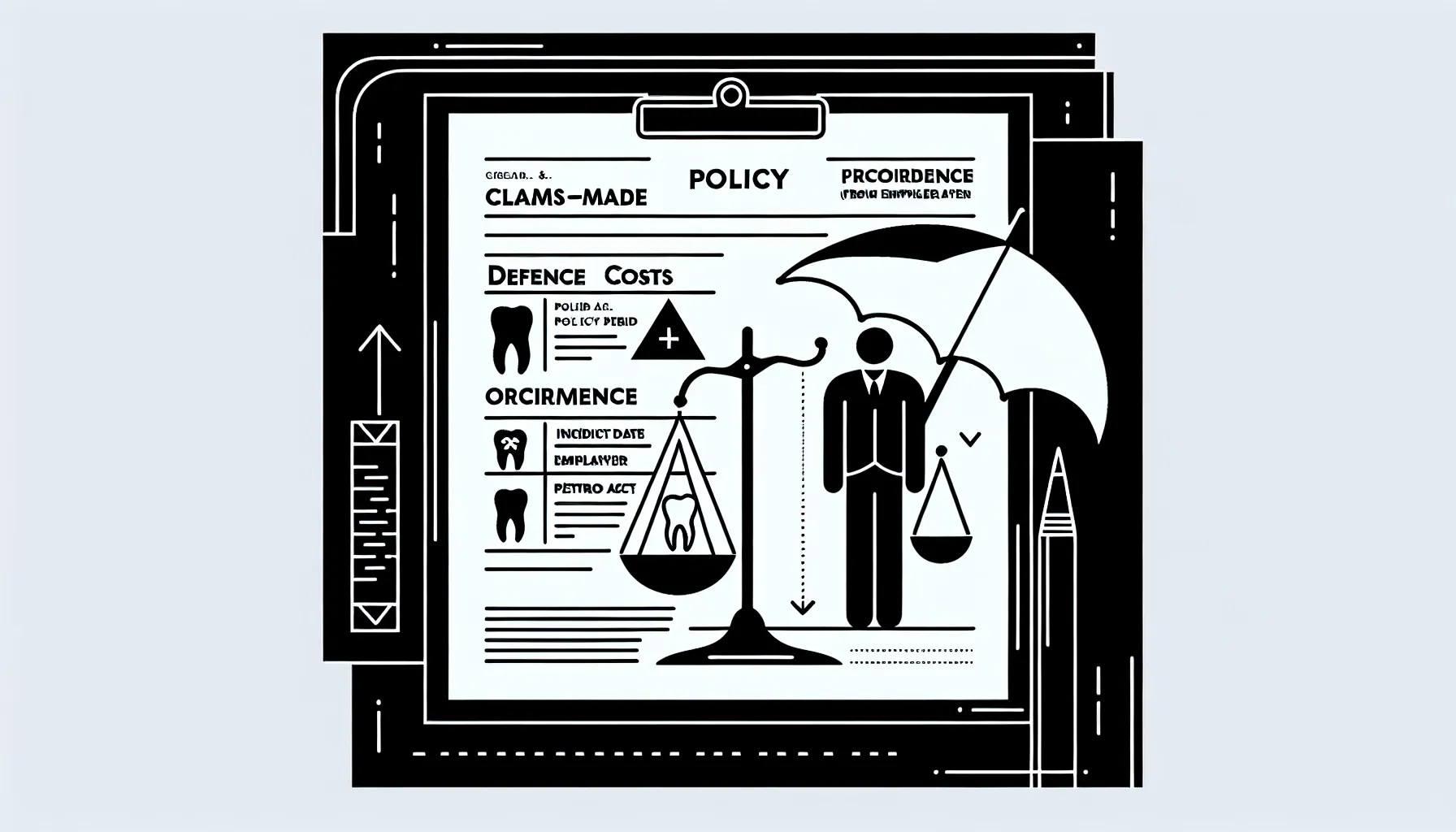
Malpractice provisions use technical insurance terms that materially affect real-world exposure. Tail coverage, prior-acts protection, policy limits, deductibles, and defense costs should be evaluated together rather than as isolated contract provisions.
Tail, Prior-Acts, and Nose Coverage
Tail coverage, also called an extended reporting endorsement, extends the period during which a claim may be reported under a claims-made policy after the underlying coverage ends. It addresses claims arising from services provided during the covered period but reported later. The agreement should state whether tail is required, who must obtain it, who pays the premium, what limits must be maintained, and whether responsibility changes based on the reason employment ends.
Prior-acts coverage is generally tied to a retroactive date and allows a current claims-made policy to respond to covered services performed before the present policy period. A change in insurer or retroactive date can leave an earlier period uninsured. Nose coverage is a form of prior-acts protection supplied through a new policy or employer, but it should never be assumed without written confirmation of the applicable retroactive date and covered services.
Because allocation provisions vary, dentists should review both the contract language and available policy documents. The guide to tail insurance for dentists explains why responsibility at departure can become a significant financial issue.
Policy Limits, Deductibles, and Claims Defense
Policy limits are generally expressed as a per-claim amount and an aggregate amount for the policy period. Appropriate limits depend on the policy, specialty, services performed, practice volume, and applicable requirements. A contract should identify required limits or establish a clear standard rather than allowing material coverage changes without notice.
Deductibles and cost-sharing arrangements also vary. Some employer policies impose no deductible on the associate, while others require the dentist to contribute to deductibles, defense expenses, settlements, or uninsured amounts. The agreement should explain when those obligations arise and whether the employer can deduct them from compensation or other amounts owed to the dentist.
Defense costs may be paid outside the policy limits or may reduce the limits available for settlement or judgment. If legal expenses erode the limits, a lengthy defense can leave substantially less insurance available to resolve the underlying claim. Dentists should also determine who selects counsel, who controls settlement decisions, whether consent is required, and how the policy addresses appeals or professional licensing consequences.
Scope and Exclusions of Employer-Provided Coverage
Employer policies generally cover clinical services performed while the dentist is actively employed, properly credentialed, and working within the authorized scope of the position. Coverage may not extend to moonlighting, locum tenens work, volunteer services, treatment at unapproved locations, or activities outside the procedures and facilities contemplated by the policy. Coverage can also become uncertain during credentialing delays, leaves of absence, suspensions, or transitions between locations.
- Confirm the date coverage begins and whether provisional or pre-credentialing work is insured.
- Identify every location, entity, and professional activity included within the policy’s scope.
- Determine whether outside clinical work requires separate individual coverage.
- Review exclusions for intentional conduct, billing disputes, contractual liability, or services outside approved duties.
- Determine whether license-defense or dental board representation is included, limited, or excluded.
Professional liability insurance and license-defense protection are not necessarily the same. A policy may defend a patient claim while excluding or limiting representation in a dental board investigation arising from the same event. The contract should not describe coverage more broadly than the policy actually provides.
Individual coverage may be appropriate when the dentist performs work beyond the employer’s practice, needs continuity across job changes, or cannot obtain adequate post-employment protection through the group policy. Any individual policy should be coordinated with employer coverage to avoid gaps, conflicting reporting requirements, or disputes over which insurer controls the defense.
Contract Terms That Can Increase Malpractice Exposure
Insurance is only one part of malpractice risk. Employment agreements frequently contain indemnification, reimbursement, reporting, and cooperation provisions that allocate responsibility independently of the policy. An indemnification clause may require a dentist to reimburse the employer for claims, defense costs, billing disputes, or contractual breaches even when the insurance carrier denies coverage.
Reporting duties are also critical. Policies and contracts commonly require prompt notice of adverse events, patient complaints, demands, or circumstances that may develop into a claim. Failure to follow the required procedure can jeopardize coverage. Cooperation clauses may require the dentist to assist in the defense, but the agreement should clarify who selects counsel, controls settlement, communicates with licensing authorities, and handles an appeal.
Termination provisions frequently determine whether tail coverage is required and who bears the cost. Responsibility may vary depending on whether the dentist resigns, is terminated without cause, or is terminated for cause. Because these details directly affect departure risk, dentists should review malpractice language with the agreement’s termination provisions rather than treating insurance as a standalone benefit.
Restrictive covenants can compound the financial impact. A dentist may be required to fund tail coverage while also being restricted from practicing within a particular area. The interaction among separation rights, insurance obligations, and dentist non-compete terms should therefore be evaluated together under applicable state law.
Some agreements also permit the employer to seek reimbursement for settlements, judgments, deductibles, or defense expenses. These clauses should be examined for limits, procedural safeguards, evidentiary standards, and protection against unilateral deductions. Settlement authority deserves particular attention because an admission or settlement may affect credentialing, reporting, reputation, or licensure even when the insurer pays the financial amount.
Coverage Risks During Career and Practice Transitions
New associates often rely entirely on employer-provided coverage without confirming when it begins, whether they are individually insured, or whether it applies to all assigned procedures and locations. Credentialing gaps matter because services performed before coverage becomes effective may fall outside the policy. The contract and policy should also address emergency treatment, expanded duties, multiple practice sites, and any outside professional activities.
Leaving a practice creates one of the highest risks for uncovered claims. Under claims-made coverage, protection for prior services can end when the dentist is removed from the policy unless tail or prior-acts coverage is secured. Associates should obtain written confirmation of extended reporting arrangements, applicable limits, the retroactive date, and any overlap between the former employer’s policy and the new employer’s coverage. Additional information about malpractice coverage terms should always be verified against the actual policy documents.
Buying into a practice or becoming a partner changes the nature of the exposure. In addition to individual clinical liability, an owner may face practice-level or vicarious liability risks. Buy-in and partnership documents should address continuity for prior acts, unresolved incidents, policy limits, entity coverage, and responsibility for claims associated with services performed before or after the ownership transition. Dentists considering this step should review the related partnership and buy-in terms alongside the insurance documents.
How to Review Malpractice Terms in a Dental Contract
A useful review begins with the contract and continues through the policy documents. A promise that the employer will maintain “appropriate” or “customary” coverage may not establish the policy form, limits, exclusions, or post-employment protection. Dentists should request enough information to determine whether the written agreement accurately reflects the coverage being offered.
- The policy type, named insureds, effective dates, and applicable retroactive date
- Per-claim and aggregate limits and whether defense costs reduce those limits
- Premium, deductible, defense-cost, and cost-sharing responsibilities
- Tail or extended reporting obligations under each potential termination scenario
- Coverage for outside work, multiple locations, credentialing delays, and regulatory proceedings
- Claims reporting, counsel selection, settlement authority, cooperation, and appeal procedures
- Indemnification or reimbursement obligations that may exceed available insurance
An attorney-led review is particularly useful when an agreement includes claims-made coverage, tail payment obligations, broad indemnification, unilateral settlement authority, restrictive covenants, or an ownership transition. Chelle Law’s dental malpractice insurance review evaluates these provisions with the rest of the contract to identify gaps, clarify financial responsibility, and assess how obligations will operate when the relationship ends.
Frequently Asked Questions
What is the main difference between claims-made and occurrence coverage?
Occurrence coverage generally responds based on when the professional incident occurred, even if the claim is filed after the policy period. Claims-made coverage generally requires the claim to be made and reported while the policy is active, subject to its terms, which can create a need for tail or prior-acts protection when employment ends.
Does every dentist with claims-made coverage need tail insurance?
Not necessarily. Continued protection may be provided through an extended reporting endorsement, qualifying prior-acts coverage from a new policy, or another written arrangement. The dentist should confirm the applicable retroactive date, reporting period, covered services, limits, and responsible party rather than assuming the transition is protected.
Who usually pays for a dental associate’s tail coverage?
There is no universal allocation. The employer may pay, the associate may pay, or responsibility may depend on why employment ended. The agreement should state who must obtain the coverage, who pays for it, the required limits, and the deadline for providing proof.
Does employer malpractice insurance cover outside dental work?
Employer coverage may be limited to services performed for the employer at approved locations and within authorized duties. Moonlighting, volunteer treatment, locum work, or services at another practice may require separate coverage. The policy language and endorsements control the actual scope.
Can malpractice defense costs reduce the available policy limits?
Yes, under some policies. When defense expenses are paid within or erode the limits, less insurance remains available for settlement or judgment. Dentists should determine how defense costs are treated and whether deductibles or other expenses can be charged to them.
Why should malpractice terms be reviewed with termination and non-compete clauses?
Termination may trigger tail obligations, reporting deadlines, repayment duties, or loss of group coverage. A non-compete may simultaneously restrict where the dentist can work, increasing the financial effect of those insurance obligations. Reviewing the provisions together provides a more accurate picture of departure risk.
Understand Your Dental Malpractice Obligations Before You Sign
Chelle Law reviews policy language, tail obligations, indemnification, termination terms, and related contract risks so you can make an informed decision.
Contact Chelle Law