

Dental associate bonuses can look attractive during hiring, yet the first few payments often fall well below what the associate expected. That result is not always evidence of dishonesty. Bonus mechanics commonly depend on detailed definitions of production, collections, net revenue, adjustments, and eligible procedures that receive little attention when the offer is presented.
The financial consequences can be significant. Write-offs, chargebacks, lab costs, management fees, payroll draws, payout thresholds, and delayed collections may reduce or postpone compensation. The practice’s scheduling decisions, staffing levels, payer mix, and allocation of patients can also determine whether an otherwise productive dentist reaches the stated benchmark. These variables make it important to evaluate the complete formula rather than relying on a headline percentage.
Chelle Law reviews dental associate agreements to identify how bonus compensation is calculated, when it becomes payable, what deductions are permitted, and whether the employer can change the formula. A careful review can also show how bonus provisions interact with termination, repayment obligations, restrictive covenants, and post-employment reconciliation. This guide explains why bonuses frequently miss expectations and what dentists can examine before accepting an offer or questioning a surprising paycheck.
Key Takeaways
- Bonus shortfalls often result from vague definitions of production, collections, or net revenue and from deductions applied before payout.
- Worked examples can reveal how write-offs, management fees, lab costs, chargebacks, and draws affect the final amount.
- Associates should track daily production, review monthly statements, and promptly question line-item discrepancies.
- Carveouts, limits on retroactive deductions, and clearly defined guarantees can reduce uncertainty when negotiated into the agreement.
- A focused contract review is especially useful when discretionary language, clawbacks, or signing bonuses materially affect the offer.
How Dental Associate Bonus Plans Are Calculated
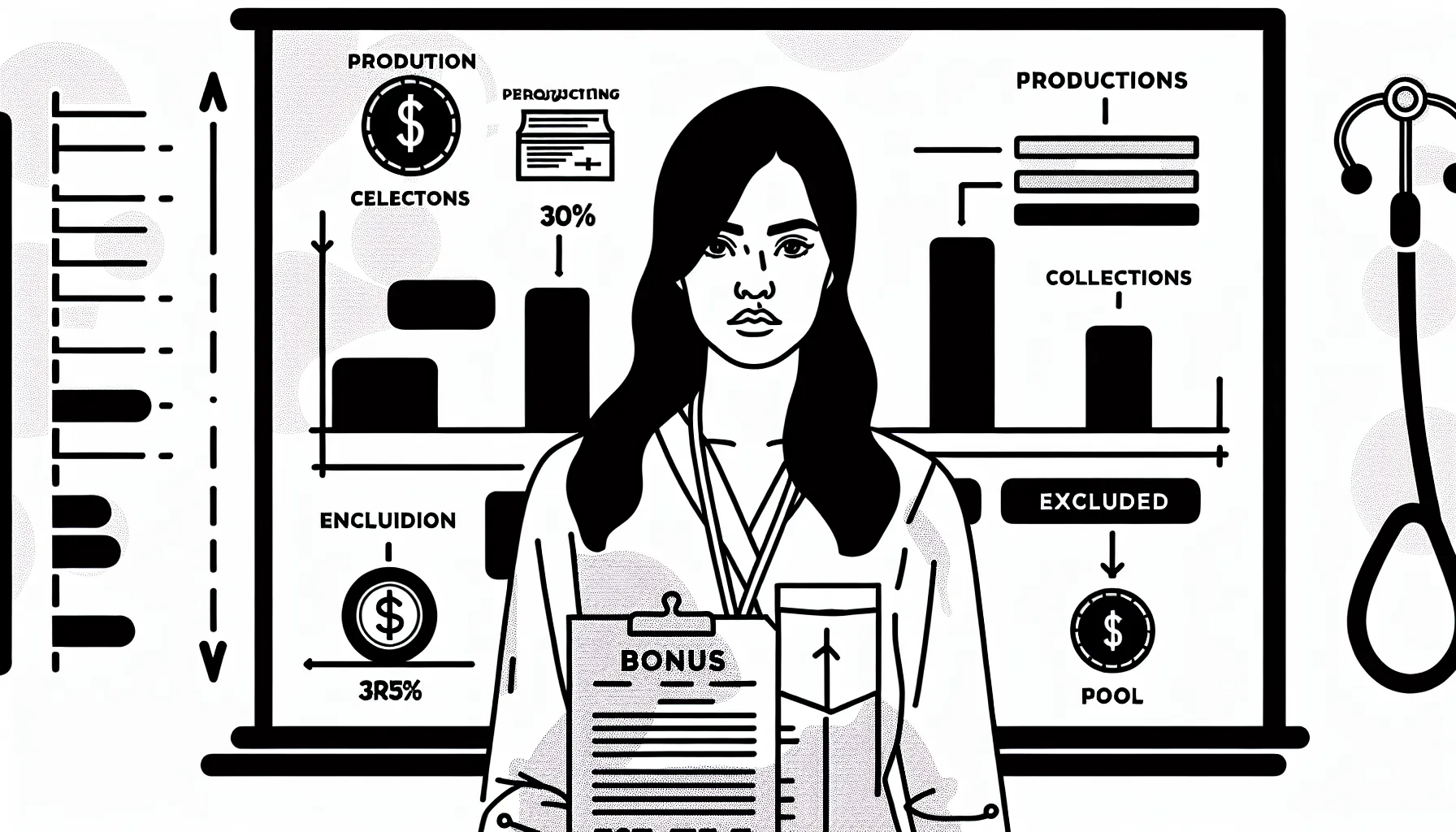
Production, Collections, and Revenue Share Formulas
Many bonus arrangements are based on a percentage of production or collections. In practice, “production” may mean the clinic fees billed, while “collections” means what the practice actually receives after contractual adjustments, refunds, and write-offs. A common formula pays a percentage above a stated threshold; another approach gives the associate a share of “net clinic revenue” after specified expenses. The result depends on which services count, how adjustments are handled, and whether discounted or charity care is excluded.
The percentage alone therefore says little about probable compensation. Dentists comparing offers should review the underlying calculation alongside broader dental associate compensation terms. A lower percentage applied to a clearly defined and favorable production figure may be more valuable than a higher percentage applied to net revenue after extensive deductions.
Thresholds, Guarantees, Draws, and Team Pools
Tiered plans may promise higher percentages once an associate reaches particular production bands. Guarantees and draws complicate that structure because an employer may pay a weekly or monthly amount against future productivity compensation and then offset that amount during reconciliation. Associates sometimes assume the guarantee is additional compensation, even though the contract permits the practice to recoup it from later earnings. The distinction is especially important when evaluating whether a draw or guarantee is truly guaranteed.
Some practices instead distribute bonuses through a team or officewide pool tied to overall performance. These plans can be attractive in a high-performing location, but they reduce the associate’s control over the outcome. A costly lab remake, an insurance credit, a weak month for another provider, or a change in payer mix can reduce the entire pool even when the associate’s personal production remains steady.
Why Productivity Targets May Not Match Practice Reality

Bonus thresholds are often stated without historical context or a worked example. A target that appears achievable on paper may assume an unrealistic appointment mix, extended hours, strong patient recall rates, or a volume the assigned location has not historically supported. When the employer does not provide transparent reporting, the associate is left to guess whether the benchmark reflects actual practice performance.
Procedure and payer mix also affect the result. Restorative or implant work generates production differently from routine procedures, while Medicaid, discount plans, and other payer arrangements may lower collections for the same amount of clinical work. A bonus formula that does not account for these variables can understate the value of complex, time-consuming cases or make the associate responsible for business conditions outside the dentist’s control.
Measured productivity also depends heavily on schedule design and support. Reduced assistant coverage, fewer hygiene days, inadequate operatory availability, cancellations, or added administrative duties can depress collections per day even when the associate works efficiently. Dentists should compare the bonus assumptions with the agreement’s schedule and duty provisions, particularly when the practice can change locations, days, or responsibilities.
Deductions and Payout Rules That Reduce Bonuses
Chargebacks, Practice Fees, and Payment Timing
Chargebacks are among the most common sources of surprise. Practices may reserve the right to deduct refunded procedures, patient credits, insurance adjustments, uncollectible accounts, and lab remakes months after the service was provided. A bonus that initially appears earned may therefore be reduced when accounts are reconciled. The contract should explain which adjustments are permitted, how long they may be applied, and whether the associate can inspect the supporting records.
Some agreements calculate bonuses only after an overhead allocation or management fee has been deducted. An associate expecting a straight percentage of collections may instead receive a percentage of a smaller figure after administrative costs, patient discounts, or other allocations. Lab expenses may create a similar reduction, making the treatment of dental lab fee deductions an important part of reviewing the formula.
Timing rules further affect how compensation appears. Monthly payments combined with quarterly reconciliation, minimum payout thresholds, and extended holdbacks can make a bonus feel delayed or diminished. If the employer may withhold payment until an aggregate minimum is reached, small monthly surpluses might never produce a check. The agreement should state the measurement period, payment date, reconciliation process, and treatment of amounts pending when employment ends.
Contract Language, Clawbacks, and Departure Risks
Ambiguous Definitions and Employer Discretion
Contracts that do not define whether “production” means billed charges, standard office fees, allowed amounts, adjusted production, or cash received create an obvious expectation gap. “Net revenue” may be equally uncertain because the term can include or exclude write-offs, refunds, passive product sales, payer adjustments, or operating expenses. Definitions should be read together with any policy incorporated by reference because the formula may depend on a separate document the employer can revise.
Language describing a bonus as discretionary or giving management broad authority to modify, suspend, or withhold it presents an additional risk. The hiring discussion may frame the payment as a predictable part of compensation, while the written agreement preserves the employer’s ability to change the rules. A dentist should determine whether the formula is a binding compensation obligation, a discretionary incentive, or a policy-based benefit that can be altered without amending the contract.
Clawbacks may apply to signing bonuses, retention payments, draws, or even previously paid productivity compensation. Some provisions require full repayment if the associate leaves within a specified period, while others allow recoupment following termination for cause, patient refunds, or later insurance denials. These obligations are often located in termination or repayment sections rather than the main compensation clause, so reviewing the agreement as a whole is essential.
Real-World Events That Lower Bonus Payments
The first bonus period frequently combines reduced onboarding production, delayed collections, initial write-offs, and the offset of any draw or guarantee. Billing and collection cycles do not align neatly with a dentist’s start date, so early compensation may look weak even when longer-term earning potential is reasonable. The associate should nevertheless confirm that the practice applied the contract’s formula rather than assuming every shortfall is an onboarding issue.
A schedule change, transfer, or reassignment can also alter which patients and procedures are credited to the dentist. When production is tracked by provider number or location, moving offices or receiving more consultations and fewer operative days can reduce bonus-eligible activity. The financial consequences can be especially serious if the employer controls these changes but the associate remains subject to the same threshold.
Departure commonly triggers a final reconciliation. Employers may seek to recover signing bonuses, payroll draws, or productivity payments when employment ends within a stated period. Late insurance denials, refunds, and post-employment adjustments can also reduce previously reported collections. Dentists should review the agreement’s termination and final-payment rules before resigning so they understand what may be deducted from the last paycheck or demanded afterward.
How Dental Associates Can Evaluate and Protect Bonus Pay
Before signing, ask for a worked example showing a hypothetical month from gross production through final payment. The example should identify write-offs, payer adjustments, chargebacks, lab expenses, management fees, the applicable threshold, and any draw offset. Written definitions and examples do not guarantee a particular result, but they make it easier to compare the proposal with the expected schedule, procedure mix, and patient base.
Associates should also maintain their own records of daily production, scheduled procedures, credits, and reported collections. Compare those figures with monthly statements and request line-item explanations when they do not match. Specific questions about particular transactions generally produce more useful answers than a broad complaint that the bonus seems too small.
Potential negotiation points include excluding certain payer adjustments, limiting how long retroactive deductions may be taken, defining eligible procedures, setting a clear payment deadline, or establishing a time-limited minimum guarantee. The most appropriate revision depends on the compensation model and the associate’s leverage. The broader dental bonus structures guide explains additional distinctions that can help dentists compare proposals.
If bonus mechanics, repayment obligations, or discretionary language materially affect the decision to accept a position, consider a professional dental associate contract review. Compensation provisions should not be considered in isolation: a long non-compete, early termination risk, signing-bonus clawback, or changing schedule can materially alter the economics of the offer. A focused review can translate the written formula into practical consequences before those provisions produce an unexpected result.
Frequently Asked Questions
Why is my dental associate bonus smaller than the percentage in my contract?
The stated percentage may apply only after the practice subtracts thresholds, write-offs, refunds, lab costs, management fees, or other permitted adjustments. It may also be based on collections rather than billed production. Review the complete formula and the definitions attached to each component.
What is the difference between a production bonus and a collections bonus?
A production bonus generally uses the value assigned to services performed, while a collections bonus depends on money the practice actually receives. The contract may further adjust either figure, so the precise written definition is more important than the label alone.
Can a dental practice deduct lab fees and patient refunds from a bonus?
A contract may authorize deductions for lab expenses, refunds, remakes, payer adjustments, or other costs. Dentists should determine which deductions are expressly permitted, how they are documented, and whether there is a time limit on retroactive adjustments.
Is a guaranteed salary the same as a draw against future bonuses?
Not necessarily. A true guarantee may establish minimum compensation that does not have to be repaid, while a draw may be an advance that the employer offsets against later productivity earnings. The repayment and reconciliation language controls how the payment operates.
What happens to unpaid bonus compensation when a dentist leaves?
The agreement may provide for a final reconciliation, delayed payment, forfeiture of unpaid amounts, or deductions for later refunds and insurance adjustments. It may also require repayment of signing bonuses or draws. Dentists should review these terms before giving notice.
What records should a dental associate request to verify a bonus?
Useful records may include production reports, collections reports, adjustment ledgers, lab charges, patient credits, and the calculation used for the applicable pay period. The associate can compare those records with personal procedure and schedule data and request explanations for discrepancies.
Understand Your Dental Bonus Before It Affects Your Pay
Chelle Law can review the compensation formula, deductions, draw provisions, clawbacks, and termination terms in your dental associate agreement.
Contact Chelle Law